Sunday, November 20, 2011
Tories, Europe and political animals who cannot be domesticated. posted by Richard Seymour
I've been away, so neglected to post this article up:There were merry guffaws when former British prime minister John Major incautiously referred to three cabinet members as 'bastards'.This was in 1993, when European economic and monetary union was nearing the completion of its first stage. Right-wing Conservative MPs were then in rebellion over the Maastricht Treaty, which ratified the European Union. The weakness and division of the parliamentary party was obvious. With a majority of only 18 MPs, 22 backbenchers voted against the government.Party whips were unable to contain the revolt with their usual mix of threats and rewards, because the rebels were confident that Major's leadership would not last long and that it would fall to them to save the Conservative Party. In that, they had the blessing of former leader Margaret Thatcher. Though the right reclaimed the leadership after 1997, they could not win an election. It fell to David Cameron, standing as a socially liberal 'One Nation' Conservative, to take the Tories out of the hard right ghetto.Fast-forward to 2011, and Cameron's prospects look bleak. The backbench rebellion that took place in October was not over an outstanding Treaty issue. Its source was a parliamentary motion for a referendum over membership of the European Union, pushed by a number of right-wing MPs. These MPs must have known there was no prospect, even if a motion was carried, of Britain being withdrawn from the EU. The Tories' business allies would be the first to scream blue murder if this were on the cards. They can only have intended to hurt their leadership.
Labels: atlanticism, capitalism, eu, europe, petit bourgeoisie, reactionaries, ruling class, tories
7:11:00 pm |
Permalink |
Comments thread |
|
Print |
Digg |
del.icio.us |
reddit |
StumbleUpon |
 Tweet|
Share|
Tweet|
Share|

Friday, February 18, 2011
Petit bourgeois vermin of the week posted by Richard Seymour
Labels: capitalism, lenin's tomb, petit bourgeoisie, poujadism, working class
1:54:00 pm |
Permalink |
Comments thread |
|
Print |
Digg |
del.icio.us |
reddit |
StumbleUpon |
Tweet|
Share|
Tuesday, September 28, 2010
The Tories, British nationalism, and Europe posted by Richard Seymour

In fact, while I think Cameron is more pragmatic on Europe than his Thatcherite politics and EU alliances would suggest, it would be foolhardy for him to try to take on the Europhobes in his party when he doesn't have to. The backbenchers acquiesced in his backtracking on the Lisbon Treaty so as not to divide the party ahead of the election, but many have sworn to continue the fight with Bill Cash's money. Meanwhile, Cameron's capitulation on the question of whether ministers are eligible to join the 1922 Committee showed the limits of his power over the parliamentary party. The issue of Europe crippled the Tories in the 1990s, and could well do so again if Cameron's authority is weakened. It isn't hard to see why, as this issue gets to the conflict at the centre of the Conservative Party's social base, and thus to the inconsistencies in its ideological posture.
The Tories' alternative to the social democratic settlement since the mid-1970s has been to mobilise a politics of 'the nation'. Their promise was that they could restore national competitiveness through liberal economic reforms, defend national sovereignty in Europe, maintain national identity by controlling immigration, maintain the nation's global standing through the Atlantic alliance (without which it would have been difficult to prosecute the Falklands war), and restore the authority of the national state by ruthlessly imposing public order. They decided that they didn't have to appeal to working class voters with redistributive, social democratic measures - they could sell a nationhood in which everyone had some sort of stake. This temporarily retarded the long-term narrowing of the Conservative base, but it was exhausted by 1989, and notably it was after this period that conflicts between the different models of 'globalisation' contained in this view started to come to the fore, with John Major haplessly trying to reconcile the party's factions. For while Tory nationalism would seem to conflict with those processes of globalisation that erode state capacity, the truth is that the Eurosceptics have always endorsed a more aggressive form of US-led globalisation than the Europhiles, who tended to be 'one nation' Conservatives.
There were always plenty of 'sceptics' in the parliamentary Conservative Party, enough to force Ted Heath to rely on cross-party support on the 1975 EEC referendum. Thatcher was herself a Eurosceptic, though her early battles over Europe were of relatively little significance. But for as long as the Cold War continued, the consolidation of Western Europe as a bulwark against the USSR was important enough to ensure that these divisions were not disabling. By the time of Maastricht, however, there was a loud and raucous 'awkward squad' on the Tory backbenches that was willing to batter its own leadership over the issue. Europe was now more of a threat than an ally for these Tories - with a reunified Germany, the danger was in a Franco-German axis rather than a Soviet axis. You may think that I'm over-egging this, but the existence of neologisms like "EUSSR" suggests that many in the Tory right really see the EU as some sort of pinko attack on Britain.
The outlook of the 'sceptics' was not simply narrow and xenophobic, however, though the propaganda often was. It was just that they were allied with those sectors of capital who either looked further afield for profits than the European markets, or who still looked for Britain to punch above its weight in the world, or who resented new labour protections and restrictions that might come with monetary union, or who didn't fancy their chances of competing effectively with French and German capital in an englarged single market. Small businesses in particular, the Tory backbone throughout the Thatcher era, were repelled by the idea that 'Eurocrats' might set rules on wages, safety laws, or even taxation, that they could ill afford. Lending spurious coherence to these diverse gripes and grievances was the Tory fetish of the nation-state, whose organic evolution over centuries seemed to set it in far better standing than a bureaucratic, rationalist imposition like the EU. The sovereignty of the British state had been a long-standing Tory theme since the French Revolution, and this seemed like the ideal issue over which to rally disaffected voters to patriotic defence.
Divisions had started to come to the fore in the late 1980s over the Exchange Rate Mechanism and moves toward a single currency, which Nigel Lawson, Michael Heseltine and Geoffrey Howe supported, and which Thatcher opposed. Howe and Lawson had secretly threatened to resign over Thatcher's intransigence and Eurosceptic speeches in Brussels, with the Chancellor operating a de facto ERM policy by pegging the pound to the Mark. Thatcher's attack on Delors' plan for economic and monetary union, published in 1989, further exacerbated splits in the Tory leadership, which contributed to a poor showing in the European elections that year. It was Howe's resignation from the cabinet in 1990 over Thatcher's anti-EU speech at a European Council meeting in Rome, signalling that Britain would never join a European single currency, that helped precipitate Michael Heseltine's challenge for the leadership, Thatcher's later resignation and Major's emergence as Thatcher's preferred alternative to Heseltine as Tory leader.
But while Major was a centrist on Europe, he had already persuaded the cabinet, as Chancellor, to join the ERM, a decision that was to weigh heavily on his premiership. Major demonstrated his commitment to Atlanticism by joining with George Bush pere in mauling Iraq during Desert Storm, but also wanted to take his party into the Maastricht Treaty, which would draw Britain into a unified European political and economic structure. To make it more palatable to the sceptics, he negotiated opt-outs from the single currency and from the provisions of the 'social chapter'. But this wasn't enough, and the party whips had to work overtime to avoid embarrassing defeats, some of which nevertheless came. The power of the whips comes from the fact that voting in the Commons is public, and thus MPs can be threatened with sanctions or offered patronage to vote one way or another, with no prospect of their being able to conceal how they behaved in the end. The fact that the rebels were able to repeatedly bloody the government's nose, with a Labour opposition opportunistically backing them up, showed that the MPs were unafraid for their careers because they knew themselves to be far from isolated either in the parliamentary party, or among the constituency party members, or among the base. Not only that, but they blamed the Europhiles for leading Britain into the disastrous Exchange Rate Mechanism, with the resulting losses of Black Wednesday destroying the Tories for at least the next election. They were confident that after defeat, it would fall to them to save the Tories from electoral oblivion - it took the Tories three successive defeats and almost a decade of pound-saving to disabuse themselves of that idea.
A survey of Tory MPs opinions carried out in 1991 for the Economic and Social Research Council can help explain why this issue can be so crippling for the Conservatives. It found that while the overwhelming majority, some 95%, favoured further privatization in some form, the parliamentary party divided almost evenly into pro-EC and anti-EC camps. There was a strong correlation between social and economic conservatism, and hostility to the EC. The most virulently free market hyperglobalisers, such as Peter Lilley, Michael Howard and Michael Portillo, were the most hostile to Europe.
There is a logic to this. The form of neoliberal statecraft that the Tories embraced after 1975 held that the state, to be properly sovereign, should be insulated from external pressures whether domestic or foreign. The state's sovereignty is thus compromised if it engages in social democratic and welfarist policies, or attempts to restrict capital flows on behalf of labour, or redistributes wealth. It has become enmeshed in a network of interest groups. In that sense, 'globalisation' may be said to erode state capacity but it erodes precisely those capacities that neoliberals do not believe it has any business exercising. It still leaves a sovereign state with the power to promote international competitiveness through the right fiscal and monetary policies, to defend national interests through military competition, and to regulate migration flows. But integration into a supra-state, centralised body cedes sovereignty on precisely those issues of monetary and fiscal policy that right-wing Tories believe the nation-state should have control.
The Tory right's opposition to European integration has tended to reflect the views of a minority sector of capital, largely small businesses. The Institute for Directors, the Federation of Small Businesses and Business for Sterling have been the main business institutions opposing the single currency, for example. By contrast, for a majority of big businesses - as for the majority of centrist conservatives - it's just good sense for Britain to get in on an economic system that gives them larger consumer and labour markets with stable exchange rates. Polls of CBI members have tended to find majorities actively favouring membership of the single currency, with only 15% specifically opposed, and some of the largest companies (eg. BA, Nestle, BAe, Dyson, Ford, BT, Kellogs, Reuters, Unilever, etc...) have dedicated resources to the 'Britain in Europe' business lobby group, which was launched by Blair, Brown, Heseltine, Clark and Kennedy, and for which Danny Alexander was once a spin doctor. The nature of the political coalition assembled here shows that the project of European integration has only superficially broad support - drawn from all three parties, but all of it clustered around a narrow segment of centrist, pro-business opinion.
Today, Tory pro-Europeans have a lot of clout with Cameron. Ken Clarke is in the cabinet, officially 'agreeing to disagree' with the Tory Eurosceptic line, and probably having more in common with Cable, Clegg, Huhne and Alexander than his fellow Tories. But the ideological space for Conservative Party Europhiles to occupy is shrinking. Psephological evidence shows that Tory voters have moved to the right over most questions of nationality - race, immigration and Europe among them - over the last decade. This preceded the global recession, but has surely been aggravated by it. The hostility to the EU among the Tory core vote is combustible. Admittedly, there are more pressing matters afoot - but the trouble with the EU is its alarming propensity to act as a lightning rod for a whole variety of concerns about nanny-statism, economic inefficiency, finance capital, bureaucracy, regulations, taxes, immigration, British sovereignty, etc etc. Part of Cameron's delicate dance of office is to unite this increasingly isolationist, reactionary base with the big business patrons for whom the Tories have existed since 1832, as well as with pro-European centrists - and that is becoming a tougher and tougher sell. There's no winning here. If Cameron tries to drag the Tories farther into the EU, he risks losing core votes to UKIP. If he tries to withdraw farther from the EU or reverse his position on a Treaty referendum again, he risks losing the centrists, his business allies, and pro-EU Tories such as Ken Clark.
The crisis of the Eurozone is grave. Recently, I hear that Merkel and Sarkozy had a stand-up blazing row over the former's ruthless pursuit of German national interest and refusal to set aside a fund to protect the Euro - Merkel eventually capitulated, but not before Sarkozy had shouted himself hoarse. The Franco-German axis is in serious peril. In that circumstance, emergencies are bound to arise. And it wouldn't take a great deal, I suspect, to get this lightly bound coalition tearing itself to ribbons over the issue.
Labels: capitalism, david cameron, eu treaty, europe, european union, neoliberalism, petit bourgeoisie, the meaning of david cameron, tories
1:33:00 pm |
Permalink |
Comments thread |
|
Print |
Digg |
del.icio.us |
reddit |
StumbleUpon |
Tweet|
Share|
Wednesday, August 04, 2010
Gordon Brown on Thatcherism posted by Richard Seymour
 Labour's adaptation to Thatcherism led to the proliferation of national mythologies, which the party leadership played no small part in popularising. These included most forcefully the idea that, whatever people told pollsters, they did not want to pay for a better funded public sector, or welfare state. They may be attracted to the abstract idea of superior public services, sentimentally attached to an outmoded form of social solidarity, but when in the ballot box they invariably sided with prudence and material self-interest. New Labour thoroughly embraced this false wisdom, and made the preservation of low taxes a cardinal principle. Once elected, amid a crisis in the public services and a general deterioration of Britain's economy and institutions, a constant circle to be squared for policymakers, especially in Brown's Treasury, was how to raise money without raising taxes, or at least without appearing to.
This led to, among other things, the fiscal calamity of the Private Finance Inititiative as a means of generating up-front revenue for new hospitals and schools without appearing to raise taxes. It also led to the culture of means-testing as an attempt to make spending constraints seem 'progressive'. The myth that the public had gone Thatcherite was obviously nonsensical. It wasn't reflected in opinion surveys, in voting patterns, or in other forms of political behaviour. New Labour's cleaving to Thatcherism cannot be seen as a reflection of what the public wants.
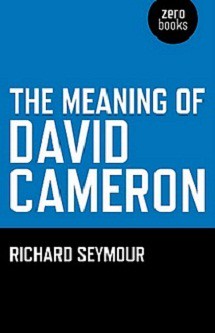
In The Meaning of David Cameron, I hypothesised that:
what happened to Labour was less an adjustment to psephological realities than an adjustment to socioeconomic realities. The Tories’ defeat of one union after another confirmed that capital’s power with respect to labour had increased, and that realistically it could also defeat any government that did not implement the fiscal, financial, and macroeconomic reforms that it supported, and which had been carefully elaborated in business-funded think-tanks as well as in the terror-state laboratories of Latin America. Labour thus set out to prove its credentials to businesses and the right-wing media, showing that it accepted every tenet of neoliberal doctrine even at the expense of offending or losing core voters. This culminated in New Labour’s grubby relationship with Rupert Murdoch, and Tony Blair’s crawling before the rich.
Recently, my attention was drawn to this elegant assessment of Thatcher's "Anglo-Poujadism", drawing on the Eurocommunism of Stuart Hall, the soft leftism of SDPer turned Liberal Democrat David Marquand, as well as a notable survey by the psephologist Ivor Crewe, co-author of a sympathetic review of the brief life of the SDP. It displays qualities that mark the author out as an intellectual heavyweight, a hard-hitting polemicist and a skilful prose stylist. Written in 1989, the review essay looks forward to Thatcherism becoming a "wasm", noting that for all the calamities that Thatcher had visited on the UK, she had not fundamentally shifted public opinion, which - on the NHS and welfare, for instance - had actually moved to the Left. Thatcher had won because of a divided opposition, not because of her own popularity. "The truth is that Mrs Thatcher holds power in spite of Thatcherism and not because of it." And in short order, when New Right ideology had exhausted itself in most of its host countries, people would look back and "wonder what all the fuss was about". This seems remarkably complacent in retrospect. And there is a tendency to revert to belabouring an Aunt Sally version of Thatcherism as, in a word, 18th Century economics and 19th Century politics, the better to exaggerate Labour's ideological distance from the Tories. Still, it is a robust defence of moderate social democracy as a popular and pragmatic electoral option.
The essayist, of course, was Gordon Brown. Little more than three years later, Brown et al were staring at the results of the 1992 general election in disbelief. The Tories had won a decent plurality, after poll leads at times giving Labour more than 50% of the vote, especially after the poll tax riots. The reasons for this electoral collapse really had little to do with clause 4, or the trade unions, or high taxes, or the working class, or with Neil Kinnock being a dreadful Welsh oik. In fact, the most extensive research showed that the biggest single factor in Labour's loss was still the division in the anti-Tory vote, specifically the fact that of those who defected from Labour to the SDP-Liberal Alliance between 1979 and 1983, the majority had broken for the long-term. They had broken with Labourism - not to Thatcherism, as I also note in my book, but to a centre-left politics that was more radical on 'social' and defence issues than on strictly class issues.
More fundamentally, as Paul Foot wrote at the time, electoral politics moves to the Left when the organised working class is strong, and notching up victories. The organised working class, though rumours of its death were exaggerated, was not strong, and hardly notching up victories to make up for the raw defeats of the 1980s. The only powerful social movement of the period was the anti-poll tax campaign, and it was one which Labour had done everything to stamp on. The involvement of Labour councils in aggressively prosecuting non-payers, for example, squandered any possibility that the party would make impressive gains on the basis of that.
However, the right-wing faction in the leadership, including John Smith, Gordon Brown and Tony Blair, took a different view. They seem to have concurred with The Sun on who had really won the election. Prosaically, the right-wing of big capital had, through the press, helped mobilise an electoral coalition comprising the petit-bourgeois bedrock, much of the 'skilled working class' and a significant minority of the professional middle class. That they had been able to do so showed that the organised working class as the basis for an electoral vehicle was finished. It showed that most people were too instinctively bigoted and conservative to vote for a real social democratic party. The Labour Right decided that it was time to radically overhaul the party's structures, attack the trade union link, and refashion the party into a much more middle class, business-friendly vehicle. Socialism in both its parliamentarist and Stalinist versions - not mutually exclusive, by the way - was out. Market liberalism was in. And that is exactly what Thatcher set out to accomplish. She had always said that her aim was to destroy socialism in Britain - by which she meant social democracy. Labour's capitulation, wholly unjustified on purely psephological grounds, falsified Brown's diagnosis that Thatcherism was a flash-in-the-pan aberration, consecrating it as political common sense. And so here we are.
PS: Sunny Hundal has written the first response to my article about the cuts yesterday. Further responses follow over the next few days, and my final rejoinder will be published on Monday.
Labels: capitalism, gordon brown, labour, neoliberalism, new labour, petit bourgeoisie, poujadism, ruling class, spending cuts, thatcherism, tories, working class
2:28:00 pm |
Permalink |
Comments thread |
|
Print |
Digg |
del.icio.us |
reddit |
StumbleUpon |
Tweet|
Share|