Sunday, October 27, 2013
From the EDL to what? On anti-racism strategy. posted by Richard Seymour
This is a document I submitted for the bulletin of the last IS Network conference. It is partially based on a post I wrote a few months ago.
I. The EDL may be finished, its method of street demonstrations having run out of steam according to its former orange eminence, Tommy Robinson. The scattered forces of the far right may be declining - if still resourceful, still too numerous, still dangerous. However sanguine our assumptions on this point may be, though, the wider situation is as toxic as it has ever been, fertile ground for a more effective populist-racist formation. The strong performance of UKIP demonstrates this potential. This new organisation Robinson intends to form with his wooden double act, Kevin Carroll, backed by his comprador allies, the state-sponsored ex-Islamist Qilliam Foundation, will surely seek to plough the same terrain.
II. The EDL was formed in 2009, fusing a number of heterogeneous energies. In one sense, it was a belated expression of a certain type of ‘war on terror’ politics, defending good old British boys against Anjem Choudary’s coffin-botherers. In another, it represented a perverse reanimation of Ulster Loyalism in the English context - the slogan ‘no surrender’ being taken straight from the death squads of the dear six counties. But it also represented the failure of New Labour’s ‘Britishness’ project. Having English, Scottish and Welsh defence leagues was not merely a function of basing the organisation on football casuals and thus deferring to the national division of teams. It underlined just how the axis of xenophobic nationalism had shifted. It also very effectively drew upon and organised the popular mytheme of ‘the white working class’ - supposedly ignored by liberal elites, abused by multicultural politicians, and oppressed by political correctness. This ideology initially began to be articulated under New Labour, and represented a right-ward shift within the Blairite section of the ideological-state apparatuses. But as with so much material that begins life as part of a neoliberal triangulation strategy, it was far more potent in the hands of bovver boys. At the core of it, of course, is the EDL’s contention that Islam is ‘extremist’, that it wages a genocidal war on all Christians, and as such represents an enemy within ‘Christian’ or ‘Western civilisation’. The spread of this style of thinking, conspiracism, is linked to the rise of political paranoia in an increasingly competitive, dog-eat-dog social world. At any rate, this interpellation of ‘culture’ - or a racialised conception of culture - into the political terrain of post-credit crunch Britain achieved one very salient effect. It articulated the concrete experiences of decline - relative national, imperialist decline; economic decline; the declining living standards of workers and a section of the middle class - within a single narrative of resentment structured by Islamophobia. The EDL’s narrative obliquely ‘mentioned’ real social facts, and provided a schema through which supporters could live their relationship to those facts. And of course, it mobilised those supporters to address the ostensible ‘cause’ of those facts in what was at first a highly effective strategy of street mobilisations with football casuals at their core.
III. This immediately posed a unique kind of challenge to traditional anti-fascist strategy in the UK, as the pivot on which a wider anti-racist politics turned. The logic went something like this: fascists are both the most dangerous spearhead of racist reaction and potentially its weakest point. We can and should mobilise the broadest possible unity against the far right; in doing so we have to challenge their racism and we can force our allies in this fight to adopt a more consistently anti-racist position. Of course, even where we do not succeed in this wider objective, a conjunctural defeat for fascism is no small thing. However, the EDL, for all that it knowingly drew in significant strata of the old far right, never became a fascist organisation. This is why the formulations from the SWP and UAF were, some slips notwithstanding, generally very careful: for example, the EDL was “a racist organisation with Nazis at its core”. It resembled a fascist organisation in some respects. For example, its emphasis on control of the streets. Or, its forms of alcohol-greased, macho solidarity, its rabble-paramilitarism. Or, its focus on visual communication and symbolism invoking a cod national mythology (the crusades). Or, finally, the fitful tendencies of the EDL leadership to try to broaden its range of targets (to include students, for example) so that its counter-subversive activities begin to vaguely resemble traditional fascist anticommunism. Yet, it did not become a fascist organisation dedicated to the overthrow of parliamentary democracy and the smashing of workers organisations. In its overall make-up, its strategy, its ideological orientation, it was closer to Geert Wilders, a populist-rightist on the far right of liberal democracy, than to Nick Griffin. And the existence of such an ambiguous, ‘contradictory’, hybrid formation posed, as I say, a challenge to the anti-fascist strategy. The tactical response of antifascists, sensible in its way, was to treat the EDL as a kind of fascism-in-becoming. Since fascism was its telos, it had to be dealt with as would any fascist organisation operating in the same way: broad antifascist coalitions harnessed, where possible, to a strategy of militant confrontation led by the radical wing of the antifascist movement. This usefully limited the EDL’s physical advances, in part by forcing the police to adopt different containment strategies, and among other factors it helped prevent their demonstrations from acquiring a certain critical mass. However, this was only ever useful as a holding response. The underlying problem was that the EDL were building on ideologies that were profoundly mainstream. This is why the media, and certain politicians, can often be found treating the EDL as if they were merely misguided and pursuing counterproductive strategies. And a strategy of harassing the EDL without also doing work on the underlying political and ideological ground could only ever yield short term results.
IV. The fight against racism is a long-term fight that has to be conducted on many different levels. It is not just a question of winning immediate political battles - a glorious victory in Walthamstow or whatever. The tempo of political struggles is extremely rapid, and the half-life of a particular struggle can be very brief indeed. But these struggles are fought on a terrain formed by years of cultural and ideological work, between forces shaped by that same work over a long duration. The tempo of cultural and ideological battles is, compared to political fights, glacial. But just because there are no immediate successes in these fronts doesn't mean they are of no value - they are absolutely central. The intense racist backlash around the English riots, or that following the Woolwich killing, was not inevitable. Such episodes take place on the basis of efforts by diverse forces to elaborate new racist ideologies over a long period.
V. We cannot fight the EDL without also combatting the other major forces of racism in society. The EDL would be nothing without the tabloids, the police, the neoliberal parties in parliament, and so on. The ideologies which legitimise the EDL's actions or at least render them as explicable reactions to extreme provocation, originate in Whitehall, the BBC, the press, parliament and the business funders of reaction. And to defeat those forces we need a different range of tactics. The EDL is primarily based on street violence, so the onus is on counter-mobilisation and self-defence. The same tactics could not be deployed against UKIP, the Murdoch press, or the Home Office. I don't propose a smorgasbord of alternative tactics here; I merely highlight the need for something more than counter-mobilisations.
VI. There is no future in attempting to collapse anti-racism into anti-austerity struggles. Such attempts represent a strain of workerism, and have emerged from some surprising quarters - including Alexis Tsipras. Racism does not simply emerge as a displaced form of despair over deprivation or insecurity. Its development and spread may be accelerated by profound political crisis, the breakdown of authority, crises of overproduction, financial collapses, and so on. As I have suggested, one of the things that EDL racism organises is the experience of certain social classes in the context of crisis and decline. And certainly, as a consequence, the struggles over the capitalist crisis and its resolution have a relationship to the struggle against racism: this means that initiatives such as Left Unity and the People's Assembly should take anti-racism seriously as a semi-autonomous component of their broader strategy. But to understand the relationship between racism, economic crisis and emerging political subjectivities requires an analysis light years ahead of the lingering 'capitalist crisis = hard times = racism' model.
VII. There can likewise be no attempt to collapse anti-racism into the antiwar movement, such as it is. That is no less reductive. For example, the analyses of the Woolwich killing that attempt to ascribe it to the 'war on terror', and therefore to orient analysis primarily toward antiwar activism, strike me as unconvincing. Michael Adebolajo and Michael Adebowale certainly seem to have responded to the context of the 'war on terror', and to have explained their actions in that context. But the processes through which they decided to join the most marginal and militant of Islamist sects in the first place are likely to be rooted in the daily processes of British capitalism. We need to fight and win that argument: that Britain is a profoundly racist and unjust society in which black people are humiliated and deprived in all sorts of highly visible ways. More generally, the forces of racist reaction in our society are not monomaniacally obsessed with the categories of the ‘war on terror’. UKIP, for example, is Islamophopic, but just as importantly it is anti-immigrant and xenophobically anti-European. There is a rich brew of bigotries fusing together in provincial, parochial England, and their specific relationship to the daily workings of capitalism must be grasped as well as their imbrication with imperialist violence.
VIII. It's been obvious for a while, and it is more obvious now. One cannot segment off different types of racism as if they are completely separate; they are mutually reinforcing. The rise in Islamophobia, as we saw during the riots, and as is becoming clear from the intriguing raciologies arising from the Woolwich killing - the EDL speaker in Newcastle urged his audience to "send the black cunts back" - is not exclusive of a long-term regeneration of other types of racism. Indeed, Islamophobia's role as the dominant form of culturalist racism permits the rehabilitation of the discredited elements of racial essentialism, while at the same time articulating them in a new form. What this means is not simply that Islamophobia is simply a cover for 'traditional' types of racism. It used to be argued that it was merely a way of being racist toward Pakistanis. No, current forms of racism do not simply reanimate older forms. As Stuart Hall put it, "Racism is always historically specific. Though it may draw on the cultural traces deposited by previous historical phases, it always takes on specific forms. It arises out of present - not past - conditions, its effects are specific to the present organisation of society, to the present unfolding of its dynamic political and cultural processes - not simply to its repressed past." The current forms of racism refer to and organise current antagonisms, expressed in complex political struggles, from the 2001 riots to the 2012 riots. And there is something very specific about Islamophobia and its content - the obsession with religious identities, with the amateurish hermeneutics of the Quran, and so on - something very current. The point is not that Islamophobia is a cover, but rather that there is a convergence in the techniques of racialisation, the political forces involved, and the ideational content involved in the types of racism in Britain today. I think this means that it would a political mistake to try to identify one type of racism as the 'respectable racism' and simply campaign against that - the tendency is for racism in general to be made 'more respectable', and therefore we need a multi-pronged assault on racism in general.
Richard Seymour
Labels: 'british values', 'extremism, 'race', british state, edl, english defence league, islamophobia, New Category, racism, racists
9:01:00 pm |
Permalink |
Comments thread |
|
Print |
Digg |
del.icio.us |
reddit |
StumbleUpon |
 Tweet|
Share|
Tweet|
Share|

Wednesday, November 07, 2012
Carry On the Brits posted by Richard Seymour
My latest for the Guardian deals with what is marketed as a light-hearted, satirical look at all the countries that Britain has invaded, and with the culture of empire nostalgia and nationalist reflux that it participates in:The other countries must feel so left out. New research shows that practically everyone has been invaded by British troops at one point or another. A "staggering 90% of the world's nations" have been overrun by the turbulent Brits – Sweden, Mongolia and the Vatican City are among the 22 to have been tragically overlooked.
If you think this is a facetious tone to adopt, it is nothing compared with the knockabout, what-a-larf tone of some of the coverage that has been lavished on this new book. In a way, this is what the book set out to accomplish. As its author says, it is lighthearted fun, and it claims not to take a moral stance on Britain's empire.
In fact, that latter claim is not quite true. To begin with, the very posture of lighthearted satire implies a certain perspective on events that most people might find questionable. Imagine a gentle farce on the Rwandan genocide, and you see how incongruous it is. Moreover, when the author claims that there is much in Britain's imperial past to be proud of, and some aspects that would make one less proud, this is an explicit moral stance. It just happens to be a stance of, at best, moral ambivalence. Such just is the evasive register of empire nostalgia and apologia these days.
Labels: 'british values', british empire, colonialism, history, imperialism, liberal imperialism, nationalism
1:03:00 am |
Permalink |
Comments thread |
|
Print |
Digg |
del.icio.us |
reddit |
StumbleUpon |
Tweet|
Share|
Thursday, September 06, 2012
Mad dogs and Englishmen: Stuart Hall on 'Englishness' posted by Richard Seymour
My latest for Jacobin, should you be interested (of course you are):Stuart Hall, prelate of British cultural studies, has intervened in the Labour Party’s current debates about ‘Englishness’. He is brief, but nonetheless interesting: “I talked to Cruddas about this … I think I understand his preoccupations rather more than Maurice Glasman’s. In a constituency like Cruddas’s, where you’re fighting the far right, you have to think about those things [English identity, immigration]. But you have to be careful about how you recruit them. He came to talk to me about the New Left, which, of course, was interested in the popular language of the nation. But I had the feeling he was raiding the past, out of context, in a way. I do think Englishness is something we need to talk about, but it’s contested terrain that is structured powerfully against a contemporary radical appropriation.”This is perhaps a more pointed intervention than the tone of guarded scepticism would lead one to believe...
Labels: 'british values', britishness, class, englishness, gramsci, labour party, labourism, nationalism, populism, racism, stuart hall
2:19:00 pm |
Permalink |
Comments thread |
|
Print |
Digg |
del.icio.us |
reddit |
StumbleUpon |
Tweet|
Share|
Tuesday, September 06, 2011
Cameron's immigration calamity posted by Richard Seymour
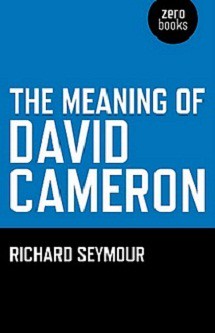
In The Guardian on the immigration figures and Cameron's troubles with the Right:So why did Cameron make a futile promise that he knew would cost him politically? Partly, he is torn between his business allies, who favour a relaxed approach to immigration, and the lower-middle-class Tory bedrock, who would ideally like to inhabit the sort of all-white chronotope of modern Britain purveyed by Midsomer Murders. Cameron has attempted to manage this by triangulating. Thus, his cap on non-EU migration partially made up for his reneging on the "cast iron" guarantee to hold a referendum on the EU treaty. Similarly, he has made concessions to alarmism about immigration threatening "our way of life". Yet, under pressure from big business, he has relented, even promising last year to relax the cap on non-EU migration. Thus, while tending to give business what it wants, Cameron engages in strategic rhetorical tilts to one or other element in an unstable Tory coalition, in an attempt to prevent the whole from collapsing into fragments as it did over Europe in the 1990s.
Labels: 'british values', capitalism, conservatism, eu, immigration, racism, the meaning of david cameron, tories, working class
5:46:00 pm |
Permalink |
Comments thread |
|
Print |
Digg |
del.icio.us |
reddit |
StumbleUpon |
Tweet|
Share|
Friday, April 29, 2011
We ain't all posh like the queen. posted by Richard Seymour
Labels: 'british values', britishness, monarchy, nationalism, royal scum
10:20:00 am |
Permalink |
Comments thread |
|
Print |
Digg |
del.icio.us |
reddit |
StumbleUpon |
Tweet|
Share|
Wednesday, April 27, 2011
The English ideology IV: 'British Values' posted by Richard Seymour

“Qualities of creativity built on tolerance, openness and adaptability, work and self improvement, strong communities and families and fair play, rights and responsibilities and an outward looking approach to the world that all flow from our unique island geography and history.”
It would be tempting, but mistaken, to characterise this rhetorical soufflé as meaninglessly pneumatic. It is easy to point out that ‘tolerance, openness and adaptability’ are complex attributes that don’t attach themselves to nation-states much less to just one nation-state, while ideas of ‘work and fair play’ mean different things to a postal worker, Jamie Oliver, a GP, Prince Charles, a call centre worker or a self-employed plumber. This is not the point. Blair’s tribute is a meaningful construction, but its meaning works through allusion and condensation. It indirectly mentions the material modes of existence of polyglot social layers, retaining its ability to do so precisely through its indirectness. It thus universalises (within its parochial national purview) experiences which have a particular social origin.
For example, the appeal to “strong communities and families” most directly touches on the experiences and aspirations of those inhabiting small towns, villages, and enclosed urban spaces. There, the very compactness of social organisation, the miniature scale of societies contained therein, and the spatial allotments of wealth and status within them, create highly localised identities – this street, that estate, our household. In the posh, prim looking terraces populated by small families, often with both parents in full-time, ‘skilled’ employment, and Neighbourhood Watch schemes on the go, the strong community and family is a by-word for the social facts – interpreted as cultural, behavioural qualities – which seem to set them apart from the sink estates. ‘Race’ penetrates this psychic terrain in complex ways, inasmuch as the social facts adduced above can be seen by some as traits of a possessive ‘whiteness’, so that this respectable looking little street with its white families and smug lower middle class conservatism, can be opposed to that dirty little conurbation at the other end of town where Asian or black citizens live with disproportionately high levels of unemployment, poverty and crime. Such social facts give the appeal to ‘strong communities and families’ a charge that it lacks in the flux of big metropolitan areas where people are as likely to live alone, communally, or with lodgers or friends, as they are to inhabit a traditional nuclear family unit, and where the delineations of race, ethnicity and culture constantly give way to hybridity.
And yet, few who have grown up in nurturing families would object to the idea of ‘strong families’. Even with all their usual patriarchal tyrannies and exploitation (there will be parents reading this who treat their kids as a source of bonded labour – their punishment awaits in the maelstrom of adolescent rebellion), functional families seem to be a source of security, love, mutual care and, not insignificantly, economies-of-scale. It is not strictly relevant here whether this perception is even accurate. The point is that it resonates with widespread experience. Similarly, the community is just that loose company of friends, acquaintances, busybodies, and helpful, moronic or batty individuals that one has known on one’s estate, terrace or flat block. Few would reject the idea that such communities are a ‘good thing’, needing strengthening. As the BBC frequently reminds us, “everybody needs good neighbours”. Strong communities and strong families can be claimed as ‘British values’ not because the UK is distinguished by such aspirations, but because only a minority are likely to object to them.
Politically, New Labour mobilised such ideas in support of a variety of objectives – providing tax credits to working families, coercing single mothers to seek waged labour, imposing curfews and ASBOs on working class children, installing CCTV on estates, boosting two-parent families, and so on. This brew of modest social democracy and strident social authoritarianism is hardly unobjectionable, or lacking in opponents. But it is embedded in a hegemonic language whose ideologemes, originating largely in the experiences of the lower middle class, were universalised and could thus provide a normative basis for such policies. Yet, this is no explanation in itself as to why such affirmations should be drafted in support of a notion like ‘British values’, or why politicians felt compelled at the turn of the millennium to assert the existence of this elusive creature, even as the irresistible winds of ‘globalization’ were supposedly laying waste to passé conceits such as nations.
For, if the tempo and urgency of such attempted interpellations – ‘Britain needs YOU’ – escalated in the poisonous atmosphere of the ‘war on terror’, the ‘Britishness’ bug was doing the rounds in Westminster well before the évènement of 9/11 and its ensuing wars. To answer this question is to say something about the “unique island ... history” that Tony Blair adverted to, particularly the shift from colonial white world supremacy to a defensive white nationalism signposted by Powell and Thatcher, the breakdown of racial comity in some former industrial redoubts, the state of British social democracy in the wearied, cautious, conservative dog end of the twentieth century, and the caesarist mode of the British executive under Blair.
I shall restrict myself here to the following observations about that. National identity, as with other identities, is relational, dependent on its situation vis-a-vis Others. Britishness was historically defined first in its imperial capacity, as the union between the Kingdom of England and the Kingdom of Scotland in 1707 provided the consolidated strategic base from which two aggressive colonial powers could make an undivided bid for world power. Together, Perfidious Albion and Imperial Caledonia set out to create a new world order. Linda Colley makes the case that British identity was decisively formed through Britain’s imperialist extensions into the Americas, Africa and South Asia, and its encounters with various Others. Imperialism obviously does not represent itself as predation, but rather as a wider moral and social mission which should engage the whole of the society, direct its overall efforts, orient its sense of identity. So, performances of Britishness took place in relation to the Indian, the Chinese, the African, and the Arab. Britishness was also, for as long as Ireland was seen as a property of the British crown, bound up with Protestant chauvinism, which provided much of the working class base of support for imperialism and Toryism in the late nineteenth and early twentieth centuries. In the latter half of the 20th Century, Britishness was reproduced through constant, historically disembodied 'memory' of World War II. Yet as that cachet lost its persuasive power amid colonial retreat and relative decline, a newer sense of Britishness emerged through Powellism and the search for a culturally pure, white Britishness. Britishness thus shifted from its orientation toward a global white world supremacism to a defensive white nationalism.
In the Thatcher era, a brief festival of British revivalism harnessed the remaining energy behind this decaying idea on a series of spectacles from the royal wedding to the Falklands jubilee. These dramas of rebirth and tradition helped to congeal the policy mix of Thatcherism - White Brittania was defended through immigration controls, Ruled Brittania through intensified policing and public order crackdowns, Ruling Brittania through imperial reassertions and Atlanticist hyper-globalization. But by the end of the 1980s, the potency of this revival had been discharged. Partly, this was because the class alliance that made Thatcherism viable was breaking up under the weight of Thatcherism's social consequences. Partly it was because the world order was changing as the Cold War ended, and the Tory base divided over Britain's future global orientation - toward Europe, entrenched Atlanticism, or toward a garrisoned island-state? This was not something on which the manufacturers, financiers, and small traders who made up the Tory base could agree on. Obviously, 'Islam' comes into this, having played an important in British Aryan identity in the colonial era, both explaining anti-colonial revolts as 'native fanaticism' and justifying their suppression. For contemporary purposes, 'Islam' begins to become relevant to the formation of an anxious-aggressive 'Britishness' at the tail end of the 1980s, as 'black' political identities begin to break down into localised constituents and Thatcherite 'Britishness' is increasingly exhausted.
The British Labourist tradition had always incorporated the pro-empire Left, represented signally in the Fabians, and in the post-war period had developed a pronounced Atlanticist strain, which favoured managing imperial decline through the ‘special relationship’ with the United States. If Labour had a pacifist, internationalist tradition, it also boasted a monotonous parade of establishment sycophants, imperialists, race-baiters and opportunistic patriots. New Labour comprised in essence an alliance with Whiggish Liberals and social conservatives. Its turn of the millenium attempt to reflate and re-define 'Britishness' derived more from the managerial, Whiggish ideas dominating British social democracy at the depleted, dog end of the twentieth century than with major global antagonisms. The Blair administration attempted to pioneer a centre-left nationalism that would provide a basis for social cohesion (if necessary, helped along by social authoritarianism), a mobilising discourse for social reform, a competitive rationale for social democratic acquiescence to 'globalization' (Britain must punch above its weight), and a hegemonic doctrine underpinning Blair's autocratic executive style.
These ingredients were already evident in the 1997 election campaign, but Blair's caesarist moment came with the Kosovo war, through which he proved his mettle not as a daffy airhead 'Bambi' figure, but as a hardened ideological warrior, someone capable of whipping public opinion into line. Following this venture, which won him many ecstatic plaudits from journalists and the political establishment, he began to articulate more clearly his brochure for Britishness based on international competitiveness and military assertion. Following the riots in north-eastern towns and cities in 2001, New Labour ratcheted up those aspects of its Britishness agenda concerned with social cohesion, scapegoating Asian minorities for allegedly failing to integrate. Minorities were ordered to internalise a 'core of Britishness', which meant being politically compliant, quietist, lawful and generally effacing those culturally specific excesses that supposedly made them unacceptable to their white counterparts. But as of 9/11, Britishness was destined to have its run in with 'Islam'.
From the Rushdie affair onward, 'Islam' became an object of official ideological interrogation, as the media increasingly devoted attention to 'Islam' as a security threat, a source of political instability, and particularly a menace to the nation's values. In relation to the 'war on terror', Britishness was aggrandised through the constant belabouring, surveillance, harassment and outright repression of Muslims, even as the British state itself underwent dramatic changes, and its constituents loosened in centrifugal fashion. 'Islam' is seen as at one and the same time, too radical and too rooted; a source of instability and of exaggerated, embarrassing cohesion; revolutionary and reactionary; a politicised religion, or a pseudo-religious politics; a de-nationalised revolutionary creed, or a smug, conservative, violent upholder of 'family values' in their worst sense. Its very ability to be represented in such a shape-shifting manner makes it the ideal foe, the perfect foil for Britishness. This 'Islam' can accumulate enemies on the Left as well as the Right, among secular liberals as well as religious conservatives, among feminists as well as patriarchs. Through negative contrast, it gives 'Britishness' a force and attraction that it would otherwise lack. 'Britishness', thus defined through the encounter with 'Islam', has been routinely performed routinely by squaddies in Afghanistan, as well as by police squads, and belligerent journalists, for almost a decade now.
So, where do we stand today? The Cameron executive is, like its caricature in Steve Bell cartoons featuring the Prime Minister suited in a pink condom, slippery, soft-edged, and impossible to pin down. It lacks definition. Sitting at the apex of a weak, fractious neo-Thatcherite government, slowly pulling apart over the unlikely issue of AV, Number Ten seeks to re-deploy the elements of 'Britishness' through renewed imperial bloodletting, more tough talk about immigrants, and of course an incredible amount of bullshit and insincere sentimentality over the royal wedding. But, as polling data has more or less consistently shown, there's little enthusiasm for more war, and this one doesn't have a narrative capable of engaging 'British' sentiments even if the nation's imperial appetites hadn't been exhausted by the alliance with Bourbon Bush. And while the media, police and local councils will probably succeed in cutting out most expressions of republicanism on the day, the royal wedding is a topic of satire or bored indifference for most. Only the immigrant-baiting, which is a divisive issue for the coalition, actually seems capable of summoning the requisite temper, and even there the evidence is mixed. Yes, polls do show that the constant propaganda about immigrants and minorities has a pronounced effect on popular attitudes, and encourages a vicious minority to engage in racist violence. But on the other hand, there's no sign that talking a lot about immigration makes the Tories popular - far from it, in fact. There seems to be no doubt that a re-organised 'Britishness' could potentially provide a rightist counterpoint to social struggles against austerity, but the present signs are that 'British values' have lost touch with some of the material bases that gave them their peculiar charge and universal validity.
Labels: 'british values', british empire, british imperialism, britishness, islamophobia, new labour, racism, tories
10:30:00 pm |
Permalink |
Comments thread |
|
Print |
Digg |
del.icio.us |
reddit |
StumbleUpon |
Tweet|
Share|
Thursday, February 10, 2011
The selfish gene turns racist posted by Richard Seymour
I think it is well arguable that the bio-reductionism of Dawkins has always been inter-woven with a Thatcherite project of vicious, competitive individualism, egoistic bourgeois self-interest, and authoritarian national chauvinism, and now grounds an avowedly 'secularist' agenda which is a major vector for the revival of racism among middlebrow liberals who have already swallowed the neoliberal kool aid. I think it is more than arguable, an absolute certainty in fact, that Condell represents the rage of a post-imperialist white British middle class that has never adapted to its new circumstance. You can't tell jokes about paddies and blacks any more, because they'll get 'offended'. You can't tell the truth about Islam without some uppity leftie thug leaping to his feet to denounce you, before the Muslim interlopers trail you off to be beheaded. You can't tell a woman to shut up and do as she's told any more, without Andy Gray getting the sack. "Not in my country," Condell, Dawkins and their whole terrified, stupid, solipsistic, self-pitying troupe expostulate. So, resolutely, with considerable courage given the immense wealth and resources at the disposal of their opponents, they tell the truth that has been repressed for too long, that not all cultures are equal, that immigrants are rapists, that no one invited them here and they can fuck off if they don't like it, and that the British way-of-life-dammit is worth defending against these intruders. These people are no more secularists than Richard Desmond is a feminist. Dawkins doesn't embrace this ranting, reactionary idiot because he favours the separation of Church and State, but because his politics of resentment and Anglo-chauvinism (no surprises that Condell is a UKIP voter) chime with his own long-standing beliefs. These people represent the basest elements, the ordure, of an imperialist culture whose degeneration is spiralling now that the crisis is eating away at even the perks and security of middle class employment. And there is further still to go. The adventures of the selfish gene have not ended at this nadir, I am sure.
Labels: 'british values', 'secularism', british empire, britishness, dawkins, imperial ideology, islamophobia, middle class, nationalism, racism
11:19:00 am |
Permalink |
Comments thread |
|
Print |
Digg |
del.icio.us |
reddit |
StumbleUpon |
Tweet|
Share|
Saturday, August 14, 2010
British values posted by Richard Seymour
Jimmy Reid:To the students [of Glasgow University] I address this appeal. Reject these attitudes. Reject the values and false morality that underlie these attitudes. A rat race is for rats. We're not rats. We're human beings. Reject the insidious pressures in society that would blunt your critical faculties to all that is happening around you, that would caution silence in the face of injustice lest you jeopardise your chances of promotion and self-advancement. This is how it starts, and before you know where you are, you're a fully paid-up member of the rat-pack. The price is too high. It entails the loss of your dignity and human spirit. Or as Christ put it, "What doth it profit a man if he gain the whole world and suffer the loss of his soul?"
Profit is the sole criterion used by the establishment to evaluate economic activity. From the rat race to lame ducks. The vocabulary in vogue is a give-away. It's more reminiscent of a human menagerie than human society. The power structures that have inevitably emerged from this approach threaten and undermine our hard-won democratic rights. The whole process is towards the centralisation and concentration of power in fewer and fewer hands. The facts are there for all who want to see. Giant monopoly companies and consortia dominate almost every branch of our economy. The men who wield effective control within these giants exercise a power over their fellow men which is frightening and is a negation of democracy.
Labels: 'british values', alienation, capitalism, socialism, working class
11:20:00 am |
Permalink |
Comments thread |
|
Print |
Digg |
del.icio.us |
reddit |
StumbleUpon |
Tweet|
Share|
Saturday, June 26, 2010
On "armed forces day" posted by Richard Seymour
Today is UK "Armed Forces Day", a squalid ritual of deference and domination. So, before heading out to watch a town full of bumpkins masturbate into the bunting, I thought I'd canvas Tomb opinion on the vital question of 'British values' and 'patriotism'. I've set the poll so that you can vote as many times as you like - it makes no difference, because the final result will be determined by the markets:Labels: 'british values', british empire, britishness, colonialism, military, nationalism, patriotism, racism, white supremacy
4:16:00 pm |
Permalink |
Comments thread |
|
Print |
Digg |
del.icio.us |
reddit |
StumbleUpon |
Tweet|
Share|
Tuesday, September 22, 2009
The very British values of John Enoch Powell posted by Richard Seymour

What sort of Britishness, what sort of nationhood, did Enoch Powell defend? Before coming to his infamous Birmingham address from 20th April 1968, I want to mention a few things about Powell's formation as a politician. He was the off-spring of petit-bourgeois Black Country denizens and, as a child of the lower middle class, he was also a career-minded imperialist. He had risen through the ranks of the armed forces without seeing combat, and aspired to the highest position in the empire available. He wanted to be the Viceroy of India, the local proxy of the British crown and as close to royalty as someone of his class and rank could ever aspire to. He wanted to be a king. Powell, a classicist, was also a devotee of Britain's desert travellers, such as Wilfrid Thesiger, Richard Francis Burton, Wilfrid Scawen Blunt and Charles Montagu Doughty. He admired their unworldliness, their readiness to escape from modernity, their self-imposed exile from life. He experienced the deserts himself as a Lieutenant-Colonel in Algiers and Cairo during World War II, though his experience was not particularly heroic. He couldn't boil water, or handle a simple tin of sausages, and he once burned his moustache when he tried to get a fire going for some cooking. Still, he thought he was the right stuff to rule over a few hundred million 'coolies'.
He was also of that shade of imperialist opinion that detested the rising influence of the United States, believing America to be hostile to the British empire. And he hated Chamberlain not because of any instinctive anti-fascism but for selling Britain out. Because of his disgust over Munich, he even voted Labour in 1945, though he joined the Conservative Party. His regal dreams, as it turned out, were shattered by Indian independence, but he remained committed to the same monarchical and racial principles. In fact, upon being elected as an MP in 1950, he drew up a plan to reconquer India, which even Churchill thought was insane. And he went on to espouse the most right-wing 'free market' economics in a period when it was extremely unpopular.
There is a peculiarity in British imperial practise which is important to take note of, however. Although Powell later made his name by attacking immigrants from the Commonwealth, the traditional stance of empire was that all citizens loyal to the British monarch could have free entry to Britain. This stance was not fundamentally adulterated in the immediate period following World War II. So, for example, in 1948, one year after Indian independence was formally conceded and in the same year that the vicious suppression of the Malayan rebellion began, the Labour government introduced the Nationality Act. The Act upheld the practice of allowing free entry to the UK of all citizens of 'dependent' Commonwealth countries, affirming continuity in the face of certain post-war changes. The Act was more symbolic in this respect than it was substantial, since it did not alter the principle of free entry, supported by both Labour and the Tories. It was later falsely cited by Powellites as the basis for 'uncontrolled' immigration. What it really did was define the basis upon which immigration would be controlled, since the apparatus of exclusion was maintained for citizens of 'foreign powers' and so on.
What changed after 1945 was not the law so much as the problems facing the British state, and British capital. These included how to keep the empire, or keep as much of it as possible; how to handle the arrival of the American behemoth; how to restore the health of capitalism, and divert the growing radicalism of the working class; how, in effect, to remain a competitive centre of capital accumulation with what had been astonishing global dominion. Much capital had been destroyed by the war, and the labour force had been depleted. There was money ready to enter circulation as capital, of course, but in a dirt poor society where consumption was rationed, how was it possible to realise any surplus? With a tight labout market and a militant working class, how much surplus would it be possible to extract in the first place? The social democratic policies that capitalists often objected to were functional in this respect, since socialised housing and health significantly reduced the cost of labour. Nationalisations in vulnerable and unprofitable parts of the economy helped support more dynamic parts of the economy. And if much of the colonial apparatus was to be lost to independence struggles, thus shutting off valuable sources of hyper-exploitation, the Commonwealth could still help solve the labour supply problem. So, in 1948, the Empire Windrush arrived at Tilbury with 500 Jamaican passengers, all of them British subjects and all of them responding to a newspaper advertisement requesting labourers to come and work in the UK. The public sector began to recruit extensively from Jamaica and Barbados, raising an extra labour army of about 170,000 people before the first restrictions were introduced in 1962.
Did Powell have a problem with this? If he did, he was careful to conceal it. He had spoken out against immigration controls in 1956 and, as the Tory health minister, he had continued to draft Carribean labour according to the system's needs. In 1964, he still said that he could not support "making any difference between one citizen of this country and another on grounds of his origin". But things were happening that would soon make racist demagoguery an excellent career move. There had already been racist riots in parts of Britain throughout the 1950s, and there were plenty of shops and landlords who would have no truck with black Britons. In 1962, the Tory government had decided to impose the first controls on Commonwealth immigration, with the Commonwealth Immigrants Act. The labour supply problem had been dealt with, so the British state no longer had an incentive to defend immigration. The Act said that no Commonwealth citizen could migrate to the UK without an employment voucher issued by the government. By implication, though they were subjects of the British crown and citizens, black workers were being treated as a problem and a threat to be carefully managed. After Powell lost the Tory leadership election in 1965, he settled into the shadow cabinet and, after a few years, emerged in a new guise. He first debuted this new get-up in an article for the Daily Telegraph in 1967, entitled 'Facing up to Britain's Race Problem', in which he described the presence of Commonwealth immigrants as an "invasion" a "rising flood" that was seeing white people "driven from their homes and property" as house prices dropped. He went on to test the waters again at a speech in Walsall in 1968, where he denounced Sikhs for striking over the right to wear a turban in the workplace. I'll come back to this example in a minute. The notoriety that he received for this stance must have inflamed his ambition. He could become popular by vocalising the racist sentiments that he had denounced only a few years before.
So, he began his speech in Birmingham in April 1968 by asserting that the mark of a good statesman was a willingness to face up to dangers. The main danger, as he saw it, was described by a "quite ordinary working man" that he had encountered, who told him he would leave Britain if he had the money because he feared that "In this country in fifteen or twenty years time the black man will have the whip hand over the white man". As if he was confirming the diagnosis of this "ordinary working man", Powell went on to say warn that in twenty years time there would be three and a half million Commonwealth migrants in England. He said that by 1985, the decendants of immigrants would be in a majority, and that by allowing the inflow of "raw material" for the future "immigrant-descended population", Britain was "heaping up its own funeral pyre". He quoted correspondence from a constituent, who complained about a neighbour, an elderly white woman, being harrassed by "grinning picanninies" as she went to the shops. The correspondent said they could not speak English, but did know how to shout "racialist" at her. And, therefore, if she was thus accused, might she not end up in prison under the terms of the Race Relations Act? Powell made no attempt to refute this obvious drivel, but instead used it to bolster his claim that the presence of black citizens was a national crisis, an imminent threat to white Britons, whose freedom to live and speak within their 'own' country was being repressed. He predicted "civil war" between white and black Britons, and urged repatriation ("voluntary", of course) as the urgent solution. In so doing, he knew full well that he was encouraging the most poisonous elements in British society. He may have hoped to place himself well for a future leadership challenge, but the main effect was to strengthen the appeal of the far right National Front (NF), which grew in leaps and bounds for a decade afterwards.
Subsequent governments chose to pander to the racism that he had encouraged. The Heath government introduced the 1971 Immigration Act, and the rate of migration slowed to near zero.
Labour politicians began to attack migrants, as when Bob Mellish MP stood in the commons in 1976 and said of Malawi Asians, "Enough is enough". He was followed by Powell, of course, who repeated the same demand. The NF gained more than 5% of the vote in the Greater London Council elections the following year. The Labour government responded by increasing deportations, while immigration officials imposed "virginity tests" on Asian women. If the NF was eventually defeated by a broad antifascist coalition, though, the Tory party adopted precisely the kind of new Right policies that Powell had long advocated, and its right flank represented by people like Norman Tebbitt defended his ideas, as indeed they still do. Pursuing a particular class project, known today as neoliberalism, the Tory right also articulated in different ways the reactionary discourses of nationality and race that Powell, a would-be Viceroy and failed imperial traveller, had propounded.
It is worth noting a few things in conclusion. Powellism's defenders have always said that his followers were largely not racists. The journalist Diana Spearman analysed his post-bag in 1968 and decided that only a minority could be classified as racist, with the majority of his support attributed to fears for British 'culture' and 'traditions'. It was pointed out by anti-racists at the time that this involved precisely the typical racist gesture of constructing a non-white minority as a threat and a legitimate object of abuse and repression. This was the ideological basis of Powellism. Its staple conviction was that more black people meant less harmonious race relations, and that relatively few black people meant peace. That such culturalist arguments are still used as a justification for racism today suggests that the debate has not advanced that far. Another familiar argument, made by the dockers who protested on Powell's behalf after he was dismissed from the shadow cabinet, was that they were only protesting about 'free speech'. An Englishman, they claimed, had no right to say what he felt in his own country. And one other echo of the present was when Powell denounced what he called "communalism" during his speech in Walsall in February 1968, and then again in Birmingham that April. He was referring to the desire of Sikhs to preserve customs that he referred to as "inappropriate to Britain", namely the right to wear their turban in work. This was what he called the "canker" of "communalism". In other words, "communalism" was a code for what would now be called multiculturalism. The current obsession with questions of 'integration', the pseudo-problems of 'tolerance' and its limits, and the ends of multiculturalism, have roots in the seedy and sad career of John Enoch Powell.
Labels: 'british values', bnp scum, enoch powell, far right, immigration, national front, racism, tories
2:33:00 pm |
Permalink |
Comments thread |
|
Print |
Digg |
del.icio.us |
reddit |
StumbleUpon |
Tweet|
Share|
Sunday, July 05, 2009
Paul Gilroy on the state of 'black Britain' posted by Richard Seymour
One also has to register the way in which expressions of racism have changed tack in response to gains made by black Britons in the 1980s. The BNP, though not in good faith, argue that they have 'no problem' with the children of hard-working immigrants who helped build the country in the 1950s and 1960s. They say their problem is with those recent immigrants who they claim, falsely, haven't contributed anything. Another response to the gains made has been the sense that somehow racism is no longer a issue, something that has been helped by the shift to religion as the main basis for social divisions, and also by the development of a 'cultural crust' in which black people are integrated into television and popular musical culture. Despite this - or perhaps because of it - casual racialisation especially on issues of crime continues to take place without arousing much controversy. Thus, The Sun labelled the murderers of Ben Kinsella "ignorant animals" - not human, in other words. Meanwhile the story of the murder of two French students, Laurent Bonomo and Gabriel Ferez, was treated differently, with the headline "freed to kill". It was a story of failure in the government and prison system, not of barbarian criminals, despite the hours of torture that the killers put the students through.
Partly, what has happened to 'black Britain', says Gilroy, is that it has fallen to the same destructive political culture in which New Labour thrived. The proliferation of NGOs and think-tanks, standing as subsitutes for party and class organisations, meant that talented black intellectuals and activists were creamed off with the promise that the issue of racism could be 'managed' away. In this view, neoliberalism and privatization are not a problem, but rather are part of the new post-racial landscape in which those who led 'black Britain' in the 1980s could become careerists, entrepreneurs, using their oppression to participate in exploitative and racist practises. Baroness Amos, once an anti-racist, feminist scholar, could become a New Labour peer before taking a directorship in Titanium Resources, enriching herself on the bloody trade in tantalum that has contributed to destroying the African continent. Trevor Phillips can also ascend in New Labour's ranks and make money by advising Channel 4 during fall-out over Jade Goodie's racist remarks about Shilpa Shetty. A host of organisations devoted to supporting what might be called 'bourgeois rights' have been drafted into supporting the government, talking about the 'white working class' out of one side of their mouths and 'social cohesion' out the other side.
A new wave of occult managerialism has taken hold, with a preoccupation with the US as the 'future' of race relations. There are few attempts to work outside the official language. Anyone talking of racism is speaking in an arcane, jurassic-era language and can be dismissed. If they want to be taken seriously, they must master the new idiom of management-speak, specifically the terms of 'social inclusion', 'social exclusion' and 'social cohesion'. A particularly laughable example of this is the former editor of a black nationalist magazine called 'Alarm' (I don't think I recorded the name accurately), who has written a book called Me PLC, which tells readers that "your life is your business". Rather like one of those Victorian etiquette manuals, it functions as a neoliberal primer on how to live life as a corporation. It perpetrates a cruel trick on the unwary, as all such books do, persuading people that success is in their reach if only they adulterate their attitude toward the world.
Other dangers in the loss of 'black Britain' are the fragmentation of different 'ethnic' groups, such as during the almost pogrom-like Birmingham riots, twenty years after the Handsworth riots. New media, mobile messages, internet forums and so on helped to disseminate the idea that Carribeans were being ethnically cleansed by Asians, and carried some of the worst incitements. And the underlying situation, the demise of 'black Britain' and the yielding to a more polyglot, divisive racial situation, a polarised multiculture, is what has contributed to the sad reversion to the idea that the US is the future - why can't we have our own Obama? A point, Gilroy avers, that demonstrates a need to inquire further into how official US racism operates. It is precisely by integrating black people such as Rice into the national political leadership that the US state is able to justify its race crimes - during and after Katrina, for example. Rice herself said that she would listen to criticisms from Europeans when they had as much black political representation as America did. But Obama absolves people of the need to think for themselves, and alongside his wife, a valuable cultural asset in global counterinsurgency, fulfil a sort of messianic function (here, he recounts a story of a visit by Michelle Obama to a state school in the East End, with wowed reaction from students who were amazed at being hugged by her, gasping "it was mental!").
Gilroy, though perhaps a little melancholic, is not nostalgic for the 'black Britain' whose rites of passage he has just read. He is interested in escaping from the present impasse, and particularly from the drift toward a US-centric approach to solving the problems of racism and oppression. He suggests as a first solution the need to restore imperial and colonial history in Britain, but also particularly the history of the very struggles that made a 'post-racial' Britain a plausible fantasy. He argues that we need to root the present struggles over civil liberties and the CCTV state in past struggles over policing. And he maintains that we need to universalise the issues of oppression and exploitation - some may insist that class is the axis that universalises such questions, but Gilroy argues that despite his sympathy for this claim, there is no off-the-shelf class answer to the issues that we face today.
I think it's worth adding one thing, as a sort of postscript to a straightforward report. Gilroy, attempting to stay ahead of the game on racism and not get locked down in nostalgia or fetishism, has made sustained efforts to grasp the current structures of racist oppression as well as the resources for resistance - in After Empire and Between Camps, for example. He has attempted to deal with the issues raised by 9/11, and the 'war on terror'. But I notice that he doesn't really get to grips with Islamophobia in any convincing way. I think he takes the idea that what is at stake in such racism is 'religion' as such, far too seriously. On the other hand, there are reductionist temptations lurking in some antiwar analysis - ie, the idea that racism is driven by empire, rather than in the daily processes of capitalism as such. This is a mistake that Gilroy would never make. His attention to the details of 'ordinary' capitalist life - the experience of job markets, schools, prisons, culture, family life, etc - as well as with the ways these intersect with global issues, is one of the things that makes his current writing so vital.
Labels: 'british values', bnp, britain, cohesion, fascism, inclusion/exclusion, islamophobia, marxism 2009, paul gilroy, racism, unite against fascism
7:24:00 pm |
Permalink |
Comments thread |
|
Print |
Digg |
del.icio.us |
reddit |
StumbleUpon |
Tweet|
Share|
Saturday, May 30, 2009
You aint from round here... posted by Richard Seymour
Islamophobia Watch draws attention to a depressingly dim column by the occasionally sharp Matthew Parris. The whole thing is a tiresome whinge, culminating in this disingenuous musing:Would it be wrong to try to convey to communities in Britain who adopt the full hijab that, though it is a woman's legal right to dress as she chooses, she should recognise that she's in a country where many people will find a masked face disturbing, and that (without meaning to) she is acting in a culturally inappropriate manner, which may offend?
One is struck, powerfully, by how pathetic this is. If you are offended, or even disturbed, by someone covering a part of their face, I strongly suggest you seek treatment. Failing that, I suggest you keep it quiet, and try to remain indoors as much as possible. The modern world was not made for such precious creatures. But this attitude is also most telling. After all, the objection to the hijab/niqab/burqa (such sartorial distinctions evidently don't matter if the garments are assumed to be cut from the same evil cloth) is supposedly a universalist one. It supposedly has some connection with women's rights. Behind it all, though, one consistently finds a cowardly authoritarianism, a desire to regulate the apparel of Muslim women on behalf of that dowdy particularism known as 'British values'. Such values, where they do not amount to an assertion of the inviolable rights of property, seem to involve being bourgeois, conformist, timid, insular, and pig-ignorant. Would it be wrong to try to convey to Matthew Parris and those of his ideological persuasion that this is not the 1950s? That while it is their legal right to believe and even write whatever lame nonsense occurs to them, they should realise that they live in a society where many people will find their paranoia ludicrous? And that, without meaning to, they are confirming what everyone already knew - which is that Britain doesn't have a culture?
Labels: 'british values', 'integration', 'veil', cultural relativism, islam, islamophobia, particularism, universalism, women
7:13:00 pm |
Permalink |
Comments thread |
|
Print |
Digg |
del.icio.us |
reddit |
StumbleUpon |
Tweet|
Share|
Tuesday, February 17, 2009
A rough guide to 'extremism'. posted by Richard Seymour
On the day that we learn of Whitehall's complicity in the torture of 'terror suspects', it is reported that the same chaps who felt it proper to render Binyam Mohammed to have his genitals mutilated are now preparing a policy on extremism. I thought this would be the usual blah about caliphate this and sharia that, the standard strictures from the co-purveyors of airborne death and mayhem. It turns out that the government has a more expansive definition in mind. The government "would widen the definition of extremists to those who hold views that clash with what the government defines as shared British values". For example, their definition of an extremist would include those who "believe in jihad, or armed resistance, anywhere in the world. This would include armed resistance by Palestinians against the Israeli military." And those who "fail to condemn the killing of British soldiers in Iraq or Afghanistan." Not even 'support', but fail to condemn! This raises some interesting questions: how observant would you have to be with the condemnations? Would it be adequate to issue a single generic condemnation, or would it need to be a daily ritual? Perhaps it is an oath to take before meals - but then, how would you keep your food down?You will have gathered from all this that 'extremism' in the government's proposed definition is another word for sedition. It is about disloyalty to the state and its interests. There is, otherwise, no good reason why any right-minded person in the UK would not support some armed resistance movement somewhere, even one where Britain is arming and supporting its killers. There are plenty of oppressed people in the world, and plenty who lack pacific means to address their grievance, and unless one is a rigid pacifist there are good reasons why someone with an internationalist conscience would support armed insurgency somewhere.
There is equally no good reason for anyone who doesn't feel like it to condemn the killing of occupying troops of whatever nationality in Iraq and Afghanistan. I don't. Even if, for some incomprehensible reason, you supported the war, then you still don't need to 'condemn' anything. Gen. Sir Richard Dannatt doesn't. In fact, you would be pretty stupid and hypocritical to support a war but condemn the other side for fighting back. If you march into another country with guns and tanks and start blowing up buildings and taking over the government, then you had better be ready for some action. If you don't want some insurgent's IED to pound molten steel up your jacksie, then take your caper elsewhere. What the British government is demanding is conformity and patriotism of a kind that makes Norman Tebbit's 'cricket test' look relatively harmless. He just wanted people to support the English side in some strange recreational activity originating in the 16th Century. These bastards want everyone to support an imperialist army that shares responsibility for, among other things, over a million deaths in Iraq. The language is such that they appear to be targeting Muslims in particular, but this is ultimately about leveraging patriotism and anti-Muslim racism the better to conscript public opinion in support of the government's wars, and discipline antiwar opposition. This is what the fantasy of 'British values' is all about.
Labels: 'british values', 'terrorism', 'war on terror', afghanistan, extremism, imperialism, iraq, islamophobia, Israel, palestine
7:28:00 am |
Permalink |
Comments thread |
|
Print |
Digg |
del.icio.us |
reddit |
StumbleUpon |
Tweet|
Share|