Friday, March 18, 2011
Qadhafi calls a ceasefire posted by Richard Seymour
David Hearst is very shrewd on the subject of Qadhafi's ceasefire:Beware of getting what you wish for. The ceasefire Colonel Gaddafi has just announced is not a vindication of the decision of the UN security council to get tough, nor a result of the wide backing the vote got from the Arab League and, unusually, three members of the African Union.
It is the calculation of a man who, contrary to popular opinion is not mad, but behaving quite rationally. It is the move of a man who is trying to counter the threat of a foreign military intervention by splitting the coalition before it has really had time to gather in Paris on Saturday.
A ceasefire, if it holds, would partition the country, and allow Gaddafi to keep control of the most important part and the major oil ports which his forces have just won back. In one judo throw, Gaddafi has reversed the most powerful argument behind the resolution, preventing a massacre in Benghazi. The Libyan rebels in Benghazi certainly wanted a respite from Gaddafi's aircraft and heavy artillery, but hardly at the cost of abandoning their goal of liberating the whole of their country from a tyrant.
Labels: ceasefire, dictatorship, libya, middle east, no fly zone, qadhafi, revolution, united nations, US imperialism
7:09:00 pm |
Permalink |
Comments thread |
|
Print |
Digg |
del.icio.us |
reddit |
StumbleUpon |
 Tweet|
Share|

Tuesday, March 15, 2011
Craig Murray on the invasion of Bahrain posted by Richard Seymour
"A senior diplomat in a western mission to the UN in New York, who I have known over ten years and trust, has told me for sure that Hillary Clinton agreed to the cross-border use of troops to crush democracy in the Gulf, as a quid pro quo for the Arab League calling for Western intervention in Libya.
"The hideous King of Bahrain has called in troops from Saudi Arabia, UAE and Kuwait to attack pro-democracy protestors in Bahrain..."
The space in which to argue that the drive for a no-fly zone is unrelated to the wider counter-revolutionary thrust of the US in the region is narrowing by the day.
Labels: bahrain, counter-revolution, dictatorship, libya, middle east, no fly zone, revolution, Saudi Arabia, united nations, US imperialism
1:36:00 pm |
Permalink |
Comments thread |
|
Print |
Digg |
del.icio.us |
reddit |
StumbleUpon |
Tweet|
Share|
Friday, August 06, 2010
Their man in Haiti posted by Richard Seymour
The only election in Haiti that could possibly be legitimate would be one in which Famni Lavalas was a fully legal participant, and Jean-Bertrand Aristide their presidential candidate.
Labels: aristide, barack obama, death squads, haiti, minustah, united nations, US imperialism, wyclef jean
11:09:00 am |
Permalink |
Comments thread |
|
Print |
Digg |
del.icio.us |
reddit |
StumbleUpon |
Tweet|
Share|
Thursday, January 14, 2010
Haiti: opportunity knocks posted by Richard Seymour
You want to hear about chutzpah? You want to hear about sheer gravity-defying audacity? Well, ladies and gentlemen, comrades and friends, prepare to catch your lower jaw. Forget Limbaugh's racist anxieties. Forget about Pat Robertson drooling about Haiti's 'pact with the devil'. He's a senile old bigot, and his sick provocations are familiar by now. This is the Heritage Foundation on the Haiti earthquake, which is estimated to have killed 100,000 people:Amidst the Suffering, Crisis in Haiti Offers Opportunities to the U.S.
In addition to providing immediate humanitarian assistance, the U.S. response to the tragic earthquake in Haiti earthquake offers opportunities to re-shape Haiti’s long-dysfunctional government and economy as well as to improve the public image of the United States in the region…
While on the ground in Haiti, the U.S. military can also interrupt the nightly flights of cocaine to Haiti and the Dominican Republic from the Venezuelan coast and counter the ongoing efforts of Venezuelan President Hugo Chavez to destabilize the island of Hispaniola. This U.S. military presence, which should also include a large contingent of U.S. Coast Guard assets, can also prevent any large-scale movement by Haitians to take to the sea in rickety watercraft to try to enter the U.S. illegally.
Meanwhile, the U.S. must be prepared to insist that the Haiti government work closely with the U.S. to insure that corruption does not infect the humanitarian assistance flowing to Haiti. Long-term reforms for Haitian democracy and its economy are also badly overdue.
While you're letting that sink in, let me lay this on you. It is, or ought to be, widely enough understood that the category of 'natural disaster' is increasingly redundant. Whether it's an earthquake, a storm, a flood or a crop failure, the truly shocking and baleful consequences of ecological events are generally caused by their interaction with existing political economies. Ashley Smith therefore asks the right questions:
Why were 60 percent of the buildings in Port-au-Prince shoddily constructed and unsafe in normal circumstances, according to the city's mayor? Why are there no building regulations in a city that sits on a fault line? Why has Port-au-Prince swelled from a small town of 50,000 in the 1950s to a population of 2 million desperately poor people today? Why was the state completely overwhelmed by the disaster?
Well, quite. The wretched subjugation of Haiti by the 'international community', particularly since the multilateral anti-Lavalas coup in 2004, is angrily and movingly described by Peter Hallward in today's Guardian, and there is more here (the Tomb's coverage of the coup is here). The coup was promoted to advance the process of neoliberal capital accumulation, break the left and the unions, and break Famni Lavalas and the civil society organisations sustaining resistance. For years, UN 'peacekeepers' have slaughtered thousands of Haitians, and the residents have been put through rigged election procedures. Lavalas members, priests, and activists have been subject to political imprisonment and murder, some of them characterised as 'gang' members. This is all for the aid of sweatshop bosses such as Andy Apaid, and the multinationals principally based in the US and Canada that benefit enormously from the exploitation of Haitian labour. This process of capital accumulation is what has driven Haitians out of a devastated rural economy and into impoverished slums with a tinpot infrastructure, and left them vulnerable to this extraordinary catastrophe. There are a tremendous number of NGOs operating in Haiti, but there is hardly a public service infrastructure capable of a response. What support systems were available have themselves suffered terribly in the quake.
Following from the above, such disasters are generally exploited by states and companies in the vicious and predatory way that Naomi Klein outlines in The Shock Doctrine. Perhaps a lesser known example of this is the way in which in the wake of the tsunami in late 2004, the Indonesian military took the opportunity to ramp up repression in Aceh. A more obvious example is the depraved way in which the Bush administration (and the local Democratic party) effectively ethnically cleansed New Orleans and turned it into a haven for developers and construction firms after Katrina. So, what depraved agenda is going to be more forcefully thrust on Haiti in the middle of this catastrophe? Obviously, there is no danger of Obama allowing any impoverished immigrants into the US on the back of some rickety boats. You might recall that after last year's hurricanes, his administration continued to deport people, even in the middle of urgent legal appeals. So what is the plan? Back to Ashley Smith, who writes:
In close collaboration with the new UN Special Envoy to Haiti, former President Bill Clinton, Obama has pushed for an economic program familiar to much of the rest of the Caribbean--tourism, textile sweatshops and weakening of state control of the economy through privatization and deregulation.
In particular, Clinton has orchestrated a plan for turning the north of Haiti into a tourist playground, as far away as possible from the teeming slums of Port-au-Prince. Clinton lured Royal Caribbean Cruise Lines into investing $55 million to build a pier along the coastline of Labadee, which it has leased until 2050.
From there, Haiti's tourist industry hopes to lead expeditions to the mountaintop fortress Citadelle and the Palace of Sans Souci, both built by Henri Christophe, one of the leaders of Haiti's slave revolution. According to the Miami Herald:
The $40 million plan involved transforming the now quaint town of Milot, home to the Citadelle and Palace of Sans Souci ruin, into a vibrant tourist village, with arts and crafts markets, restaurants and stoned streets. Guests would be ferried past a congested Cap-Haïtien to a bay, then transported by bus past peasant plantations. Once in Milot, they would either hike or horseback to the Citadelle...named a world heritage site in 1982...
Eco-tourism, archaeological exploration and voyeuristic visits to Vodou rituals are all being touted by Haiti's struggling boutique tourism industry, as Royal Caribbean plans to bring the world largest cruise ship here, sparking the need for excursions.
So while Pat Robertson denounces Haiti's great slave revolution as a pact with the devil, Clinton is helping to reduce it to a tourist trap.
At the same time, Clinton's plans for Haiti include an expansion of the sweatshop industry to take advantage of cheap labor available from the urban masses. The U.S. granted duty-free treatment for Haitian apparel exports to make it easy for sweatshops to return to Haiti.
Clinton celebrated the possibilities of sweatshop development during a whirlwind tour of a textile plant owned and operated by the infamous Cintas Corp. He announced that George Soros had offered $50 million for a new industrial park of sweatshops that could create 25,000 jobs in the garment industry. Clinton explained at a press conference that Haiti's government could create "more jobs by lowering the cost of doing business, including the cost of rent."
As TransAfrica founder Randall Robinson told Democracy Now! "That isn't the kind of investment that Haiti needs. It needs capital investment. It needs investment so that it can be self-sufficient. It needs investment so that it can feed itself."
One of the reasons why Clinton could be so unabashed in celebrating sweatshops is that the U.S.-backed coup repressed any and all resistance. It got rid of Aristide and his troublesome habit of raising the minimum wage. It banished him from the country, terrorized his remaining allies and barred his political party, Fanmi Lavalas, the most popular in the country, from running for office. The coup regime also attacked union organizers within the sweatshops themselves.
As a result, Clinton could state to business leaders: "Your political risk in Haiti is lower than it has ever been in my lifetime."
Would those who sycophantically defended Clinton, particularly over his Haiti policy, care to comment? Do the 'progressives for Obama' have anything to say at this point?
Labels: capitalism, haiti, multilateralism, shock doctrine, united nations, US imperialism
5:22:00 pm |
Permalink |
Comments thread |
|
Print |
Digg |
del.icio.us |
reddit |
StumbleUpon |
Tweet|
Share|
Thursday, April 17, 2008
The Deluge posted by Richard Seymour
The global food riots and protests have hit hardest in Haiti. It is to be expected that Haiti, which has struggled for so long to escape the tyranny of external powers and is today struggling under a UN mandate in which civilians are regularly murdered, should suffer the worst of the food crisis - an acute crisis, moreover, obviously created by the markets and not simply by scarcity. (Incidentally, to the extent to which poor harvests were a factor, these cannot be extracted from the intensifying problem of 'climate change'.)
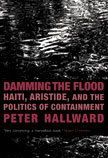
Amid the uninformative and frequently racist pieties of the media when it comes to Haiti, I have been struck by the lucidity and power of Peter Hallward's recent book, Damming the Flood: Haiti, Aristide, and the Politics of Containment. It stands out as the single most informative account of Haiti's politics so far produced, and it will surely become a classic and a key reference. If it is a counterblast to critiques of Aristide as a sell-out whose rule was becoming disastrous and autocratic, that counterblast is aimed at left-wing critiques as well as the conventional right-wing ones. I can think of Alex Dupuy's hostile book, The Prophet and Power, which - while it does not conceal what the Bush administration did to Haiti in 2004 - maintains that Aristide was a sell-out after 1994, having reverted to an authoritarian paradigm that he once condemned with the formation of Fanmi Lavalas as a split from the broader Organisation Politique Lavalas, and was arming Lavalas-supporting gangs to murder opponents. It's not just Dupuy - many former supporters believed that he had refashioned himself in the mould of the Ton Ton Macoutes. Hallward does a sterling job of defending Lavalas and Aristide, and describing the means by which Haitian popular democracy was repeatedly subverted by the United States. (In fact, Hallward's review of Dupuy's book can be read here).


Hallward's argument, based on a surfeit of data, documents and interviews, is roughly as follows (it follows at some length too - you may as well forget this post and just buy the bloody book). Lavalas as it emerged in the 1980s was a movement of unprecedented moment, led by a man hated by the elite as a combination of Castro and Khomeini, the sophisticated liberation theologian Jean-Bertrand Aristide. Hallward makes clear the particular nature of Aristide's theology: "That Aristide prefers to assert this [egalitarian] principle in primarily theological terms is an indication of its unconditional quality, not of its dependence on any sort of supernatural domain. What he calls 'God' is simply a name for an uncompromising commitment to equality and justice. 'There is no force superior to humankind' and 'There is no Messiah other than the people'." It was a grave climacteric for an elite cultivated by the US during its occupation from 1915-1934 during which time it massacred the Cacos rebels, killing up to 30,000 people, and created a plantation state from corvée labour, defended by a violent government militia comparable to the Guardia Nacionale created in Nicaragua. The US has supported that elite to this date, whether its leading spokesman is Duvalier or Apaid. The threat of popular self-government that culminated in a landslide victory for Aristide in the 1990 elections could only be answered by a coup and a wave of CIA-backed death squad violence, which killed some 5,000 people.
Aristide responded to this terror by arguing that there could be no question of confronting this terror with an armed struggle. He set about negotiating a means back to power with the US, accepting some harsh terms and more or less being compelled to take up much of the agenda of his opponent who had lost the previous elections. Critics of Aristide say that he made too many compromises to return to power, and effectively become a wholly bought adjutant of American power. Hallward maintains that Aristide had little choice by 1994, given the balance of power in Haiti, but to cut a deal with the US and adopt a more conciliatory posture. Moreover, the fact that he was able to do so was nothing short of miraculous, given that the Ton Ton Macoutes who were ravaging the country even as the negotiations wore on, were a direct extension of American power in the country. In fact, as the violence of the FRAPH escalated, US negotiators were not shy about reminding Aristide that unless he was a lot more cooperative, those nasty people might end up becoming "the dominant force on the ground". (Aristide's own account of the negotiations can be read in his 1996 book Dignity). It was quite a remarkable turnabout to have Clinton announce in September 1994 - to great disquiet among neocons and nutters of the John McCain variety - that he was going to send in 20,000 marines to remove the "most brutal, most violent" regime in the hemisphere. The solidarity movements in the US undoubtedly had a great deal to do with this, but the main reason is that the Clinton administration now had come by a different means of getting what it wanted. For, what those marines actually did was not to disarm the army, but to ensure the protection of the FRAPH soldiers and extend courtesy to the murderers while key coup leaders were exiled to the US. Many former soldiers were integrated into the new national police force (PNH) which at any rate was an immediate target for assassinations, and that police force rapidly reverted to behaviour redolent of the old army. As the transition was effected, the US was able to exert overbearing control over the reconfiguration of the state, populating it with chosen advisors and consultants. This will be familiar to those who follow such institutions as the NED - the professionalisation of the civilian component of imperialism has been a critical component of American power since the 1980s. It has helped convert quite explicit dictation of the affairs of others into a neutral exercise, a simple fulfillment of a sort of corporate strategy. The best recent guide to this tendency, albeit one that places too much emphasis on former Shachtmanites, is Nicolas Guilhot's The Democracy Makers.
Most US marines remained in Haiti from 1994 to 1996, while a small number remained behind until 2000. America's multilayered presence intensified its grip over the country. But the US could not stop Aristide from doing the one thing that the people demanded above all, which was to disband the army. However, neoliberalism meant conserving the elite, and any attempt to dilute its power was resisted by the US, usually successfully. Lavalas won the 1995 parliamentary elections resoundingly, but the main organ in the Lavalas Front, the Organisation Politique Lavalas no longer supported Aristide. Led by the career politician Gerard Pierre-Charles, the OPL sought to adapt to the new power balance. One of its leading members in the new parliament was the US-imposed conservative Prime Minister Smarck Michel. At the same time, USAID and a Washington-funded body called the Programme Integre pour le Renforcement de la Democratie (PIRED) were organising for the contuination of the business elite's dominance, with the latter using its influence to win over labour and community groups. The International Foundation for Electoral Systems (IFES) was contracted by USAID to organise 'civil society' groups - business leaders in the main - to maintain pressure on the government. Instead of allowing Aristide to continue as President, the OPL opted in 1996 to back his former Prime Minister René Préval, and - although they were swiftly disappointed by the latter's continued loyalty to Aristide's aideas - they did successfully under-sell a series of public utilities. The right-wing drift of OPL politics led to the formation by Aristide and his allies of Famni Lavalas (FL), a grassroots-based party designed to create a link between the Haiti's working population and their representatives. When several Aristide supporters won decisive victories in the 1997 legislative elections, the OPL refused to accept the results and its supporters resigned from the government, refused to accept any nominations from Préval for a Prime Minister and blocked legislation until their terms expired in January 1999. They then acted to delay elections until May 2000, which meant that Préval had to govern by decree for the next 18 months.
What happened next shocked the OPL (now renamed the Organisation du Peuple en Lutte in order to distance itself from the old Lavalas front from which it had emerged) and Haiti's business elites. Aristide won a decisive mandate with the backing of a disciplined political organisation that was far more cohesive than the loose coalition that had backed him in 1990. If Haiti used a first-past-the-post system like that in the UK or US, "Famni Lavalas would have won more than 95% of the seats in both houses of parliament". This, Hallward maintains, made the Lavalas movement more threatening than before. The opposition howled that it was a fix. Both the OPL and the new pro-army, pro-US coalition called Convergence Démocratique (CD) vowed not to accept the results. They were followed in their dismissal of the results by Western politicians and also by media sources such as Reuters and AP - the agenda-setting media, as Chomsky points out. The basis of this is a minor technical complaint by the OAS, which did not dispute the fairness of the vote or the legitimacy of the result. The OAS referred to a mistaken methology used by the independent electoral arbiter, the CEP, which had no Lavalas representatives on it. On this basis, the opposition and the United States undermined the legitimacy of a highly popular elected government and proceeded to sabotage it. The US imposed an embargo on all aid and blocked development loans, cutting the national budget in half and reducing the GDP by over a quarter in the period that followed. The Clinton administration instructed its ambassador to tell the new government that relations would not be normalised until the "problems" with the elections were resolved. The Bush administration continued these policies with even less subtlety, insistent that Aristide had no future. USAID and other organisations poured money into the coffers of his opponents, and IFES was put to work to mobilise various groups under the rubric of professional associations to act against the government.
This is where Hallward's documentation and reportage is essential. Myths abound about this period, with Aristide accused of orchestrating violence against opponents and ruling by decree. This despite the fact that having won so convincingly, he had invited the CD into the government and was met with intransigent hostility. The CD embodied leading US clients, and was quickly adopted for grooming by American PR experts (Hallward notes that James Foley, the US ambassador to Haiti from 2003, had cut his teeth grooming the KLA into a 'respectable' outfit in the late 1990s). IFES and the IRI embraced the Group of 184 (G184), which represented the most reactionary elements of the business sector under the sweatshop owner Andy Apaid junior. But it was not enough to destabilise the government in non-violent ways, so by late 2000, the opposition was trying to recruit some of the armed groups operating in the slums, some of which were simple criminal enterprise. They had no success in this venture until mid-2003. Former army personnel such as Guy Philippe, an admirer of Augusto Pinochet, were organised by the US under the rubric of the Fronte pour la Libération et la Reconstruction Nationale (FLRN). This was an organisation comparable to the Contras in Nicaragua. Other leaders included former FRAPH death squads fighters including Jodel Chamblain and Jean Tatoune. The FLRN organised from the Dominican Republic, and launched its first incursion into Haiti in July 2001, attacking the Haitian National Police Academy and various police stations. The government's subsequent arrests of suspected insurgents included some CD members, and was used as a pretext to call off negotiations between the CD and the government. Then, on 17 December 2001, 30 commandos took over the presidential palace with the help of the national police and announced that Aristide was no longer president. The subsequent popular uprising that thwarted the coup involved a few offices belonging to constituent parties of the CD being attacked. And so it went on, with repeated attacks and destabilisation, and all the while US policymakers and the IRI disavowed its connections to Guy Philippe and his merry band of putschists. (Philippe himself was unhelpful enough to warmly recall his 'good friend Stanley Lucas, scion of a wealthy Haitian family and the IRI programme director whose subsequent starring roles involved him in support for the Venezuelan opposition). The opposition itself abandoned its disavowal by 2004, warmly referring to the insurgent Macoutes as "heroes".


Despite all this pressure, the Préval-Aristide governments managed several remarkable accomplishments - reducing infant mortality from 125 to 110 per thousand live births; bringing illiteracy down from 65% to 45%; slowing the rate of new HIV infections. They did what they could to soften the blow of 'structural adjustment', by maintaining subsidies, implementing some land reforms, and promulgating certain social programmes. However, they were not in a position to implement socialist or even social democratic reforms, and most people suffered from the effects of neoliberalism. Realistically, what Lavalas could do was create a lively popular movement to try to pressure elites for change, to formulate popular demands and try to fulfil them. That movement consists of a national network of ti famnis, groups of neighbourhood militants. Because of its popularity, however, and also because of its relatively informal structure, it has been susceptible to infiltration by criminal or opportunistic elements. Leading Lavalas politicians often ended up showing more in common with the party's opponents than with its base, and did a great deal to enrich themselves and further their own careers. Corruption spread throughout segments of the Lavalas hierarchy, albeit on nothing like the scale of previous administrations, particularly that of Duvalier. Further, when the success of Lavalas showed the difficulty of organising outside it, so many opponents decided to oppose from within. Aristide had to work with hostile elements in the police, particularly the force attached to the presidential palace which - surprise - was composed of large numbers of former army members. Chavez can call upon the loyalty of army cadres in Venezuela; Aristide does not come from a military background and has no experience in fighting wars. He put up with demonstrations calling for a coup d'etat, allowed an unashamedly insurgent opposition to organise, and sought compromise everywhere: far from being a dictator, Aristide was in an extremely weak position. Yet, human rights organisations have tended to depict the Preval-Aristide years as continuous with previous and subsequent administrations in terms of human rights abuses. Hallward comments: "Here we reach the crowning achievement of the disinformation campaign ... Remember the basic numbers: perhaps 50,000 dead under the Duvaliers (1957-86), perhaps 700-1,000 dead under Namphy/Avril (1986-90), 4,000 dead under Cedras (1991-94) and then at least 3,000 killed under Latortue (2004-06). And under Aristide?" Between ten and thirty individuals killed by the PNH "whose political affiliation was often anti-government".
At any rate, given the manifest weakness of the government, and the growing problems faced by the country's poor, it should not have been difficult for the US to start paving the way for a coup and the subsequent UN protectorate. In fact, as Hallward points out, it took quite a long time and was much more difficult than the coup in 1991 - a testament to the resilience of the Lavalas movement. It required massive intervention, with 11,000 people in 1,000 organisations trained within Haiti by USAID. It required repeated incursions and a failed putsch. But perhaps most striking of all, it required elaborate attempts at winning over a diverse array of NGOs and unlikely groups like Batay Ouvriye (BO). Hallward documents who groups like Christian Aid performed a neo-colonial function, advocating CD's preferred version of events and a version of their preferred outcome (the elimination of Lavalas as the dominant force in Haitian politics). Hallward rightly points to the funding that BO received from the NED, as well, and the role it performed in polemicising against Aristide despite the fact that their own aims would be served worst by the overthrow of the government (although he uses the unfortunate term "neo-Trotskyite" to describe them). He suggests that they may have supported the coup, and that they were at least content to see Aristide go. Whatever the case, their sectarian analysis and actions did not see them attempt to hinder the coup in any way. The coup began with the siezure of Raboteau in September 2003, and the emergence of the Cannibal Army as an anti-government gang engaged in attacks on government forces the same year. In February 2004, the death squads and criminal gangs and ex-army men united for the insurgency and were shortly on the march to Port-au-Prince, perhaps even already there with several sympathisers in the presidential palace guards. The myths that were widely repeated in the media - that it was a democratic rebellion, a popular liberation struggle, or perhaps a combination of genuine revolt with initial criminal instigation, which at any rate had nothing to do with any outside powers - are meticulously taken to pieces in Damming the Flood. Essentially, it is clear that despite national and regional efforts at finding a negotiated settlement, and despite the fact that the evident difficulties being experienced by the insurgents, the opposition was determined this time to bring the government down. And it seems it was Assistant Secretary of State Roger Noriega who pulled the plug on final negotiations. The Chirac government was also anxious to get rid of Aristide and his demands for restitution for the systematic extortion of the Haitian treasury by the French state after L'Ouverture's revolution (for the amount the French deemed that they had lost as a result of the overthrow of slavery), and it restored France's longstanding relationship with Haitian elite figures such as G184 supporter Serge Gilles. Finally, Aristide was abducted on 29 September 2004. The US ambassador at the time, James Foley, claimed that it had been a rescue mission, that the US was deeply saddened by what was happening, and that to protect Aristide's endangered life they absconded with him to a safe place. It was claimed that he had resigned voluntary, with an air of passivity and acceptance. Some 36 hours after his 'resignation', as soon as he found a phone, he told every news outlet that would listen that he had been kidnapped by US forces. Hallward does not profess to be a detective, but he does an excellent job here of piecing together what happened and skewering the propaganda.
We know some of what happened next, of course: the revenge of Haiti's ruling class. The mass imprisonment and murder of prominent Aristide supporters. The restoration of convicted genocidaires. A government under a UN protectorate that carried out attacks on pro-Lavalas neighbourhoods (not to mention hospitals). Hallward documents in some detail the Latortue government's repression, as well as the massacres of the UN and anti-Lavalas gangs. However, he is fundamentally optimistic - as is Jean-Bertand Aristide in the closing interview. The coup was difficult to effect, and it could not withstand the popular counter-coup that resulted in another Preval administration. The government is still beholden to neoliberalism, the UN troops continue to commit atrocities, but Lavalas is still a powerful popular movement. Terror has not been able to destroy it in the way that the Sandinistas were destroyed, even if Haiti's position means it will take a global upturn for the left to help shake it free of domination for good. Over 200 years old now, Haiti's liberation struggle could hardly have asked for a better contemporary advocate than Peter Hallward.


Labels: coup, damming the flood, haiti, imperialism, neoliberalism, peter hallward, united nations
9:05:00 am |
Permalink |
Comments thread |
|
Print |
Digg |
del.icio.us |
reddit |
StumbleUpon |
Tweet|
Share|